


























![[GALLERY] Walking in (Downtown) Memphis](https://stmarystatler.org/wp-content/uploads/2024/04/E1DAD3FE-E2CE-486F-8D1D-33D687B1613F_1_105_c.jpeg)















The Facts:
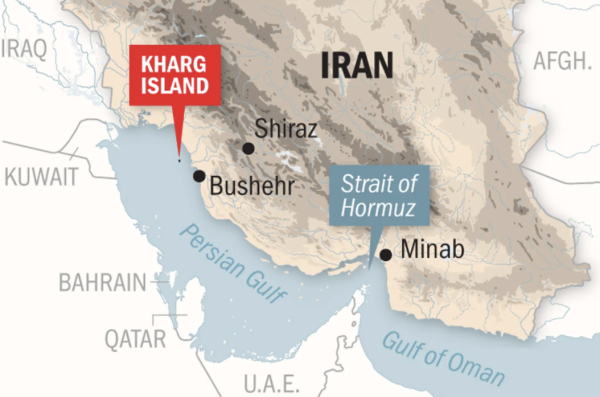
- The Strait of Hormuz is a narrow channel between the Omani Musandam Peninsula and Iran transporting about 20% of oil and natural gas globally, according to Axios.
- Crude oil is refined into gasoline, so when the price of oil goes up, the price of gas does, too.
- There is a war between the U.S. and Iran in Iran that is currently at a ceasefire.
- Kharg Island is a major location vital to Iranian exports. While the island itself has been attacked by the U.S., its oil infrastructure has not been harmed.
- Map of the Strait and Kharg Island:
Current Event:
The Strait of Hormuz is currently blockaded by Iran, disrupting the international trade of oil and causing a rapid increase in oil prices across the globe. These skyrocketing costs have caused U.S. gas prices to surge up 39% from around $3 to around $4 a gallon since the start of the war. If the U.S. follows through with their threats of damaging Kharg Island’s oil infrastructure, the cost could rise even more.
Why Should I Care?
The war draws attention to the massive economic role the Strait of Hormuz plays globally. In 2025 alone, according to the Al Jazeera Centre for Studies, 15 million barrels of crude oil and 5 million barrels of petroleum were exported using this strait, making up nearly 34% of the crude oil traded globally. Now, 10% of the world’s oil is removed from the international market because of the strait’s blockage. The blockade’s effect on the global economy impacts the U.S. and its trading partners who both transport oil through the strait. Furthermore, oil is also needed to make and transport goods, so its prices are reflected in the cost of nearly every product. Gas, carrots, t-shirts – almost everything you are shopping for is more expensive.
The normal recession risk is around 20%, but right now, estimates from Moody’s Analytics, Goldman Sachs, Wilmington Trust, and EY Parthenon have increased dramatically to 45% due to the war, and if it lasts longer, the odds are expected to go up even more.
Almost every U.S. recession has been preceded by an increase in oil prices. This graph from CNBC shows the relationship between oil prices and U.S. recessions.
The current cost of oil suggests a future recession for the U.S. These prices affect personal lives, too, as recessions can cause unemployment, increase government debt, make it harder to get loans and depress income. Even if the Strait were to open today, the blockage has already had a significant impact on the economy, and if it does not become accessible to ships soon, the effects could continue to grow unchecked. The Strait of Hormuz is vital to the global economy and now you know why.
All of this? That’s why you should care.
To learn more about this go to these websites:
How Gas is Made: https://www.eia.gov/energyexplained/gasoline/where-our-gasoline-comes-from.php
Kharg Island: https://www.pbs.org/newshour/world/kharg-island-is-key-to-irans-oil-exports-targeting-it-carries-major-risks
The Link Between Oil and Gas Prices: https://www.investopedia.com/articles/active-trading/032515/do-oil-and-natural-gas-prices-rise-and-fall-together.asp
Effects of the Blockade: https://www.axios.com/2026/04/01/oil-prices-200-barrel-strait-hormuz
Effects of the War on the U.S.: https://www.americanprogress.org/article/what-america-has-lost-in-the-war-with-iran/
Exports Through the Strait of Hormuz: https://studies.aljazeera.net/en/analyses/strait-hormuz-global-economic-shock-and-limits-military-power
https://www.iea.org/about/oil-security-and-emergency-response/strait-of-hormuz
Effects of the War on Global Energy Markets: https://www.nytimes.com/2026/04/01/world/middleeast/strait-of-hormuz-economy-oil.html
Recession Odds: