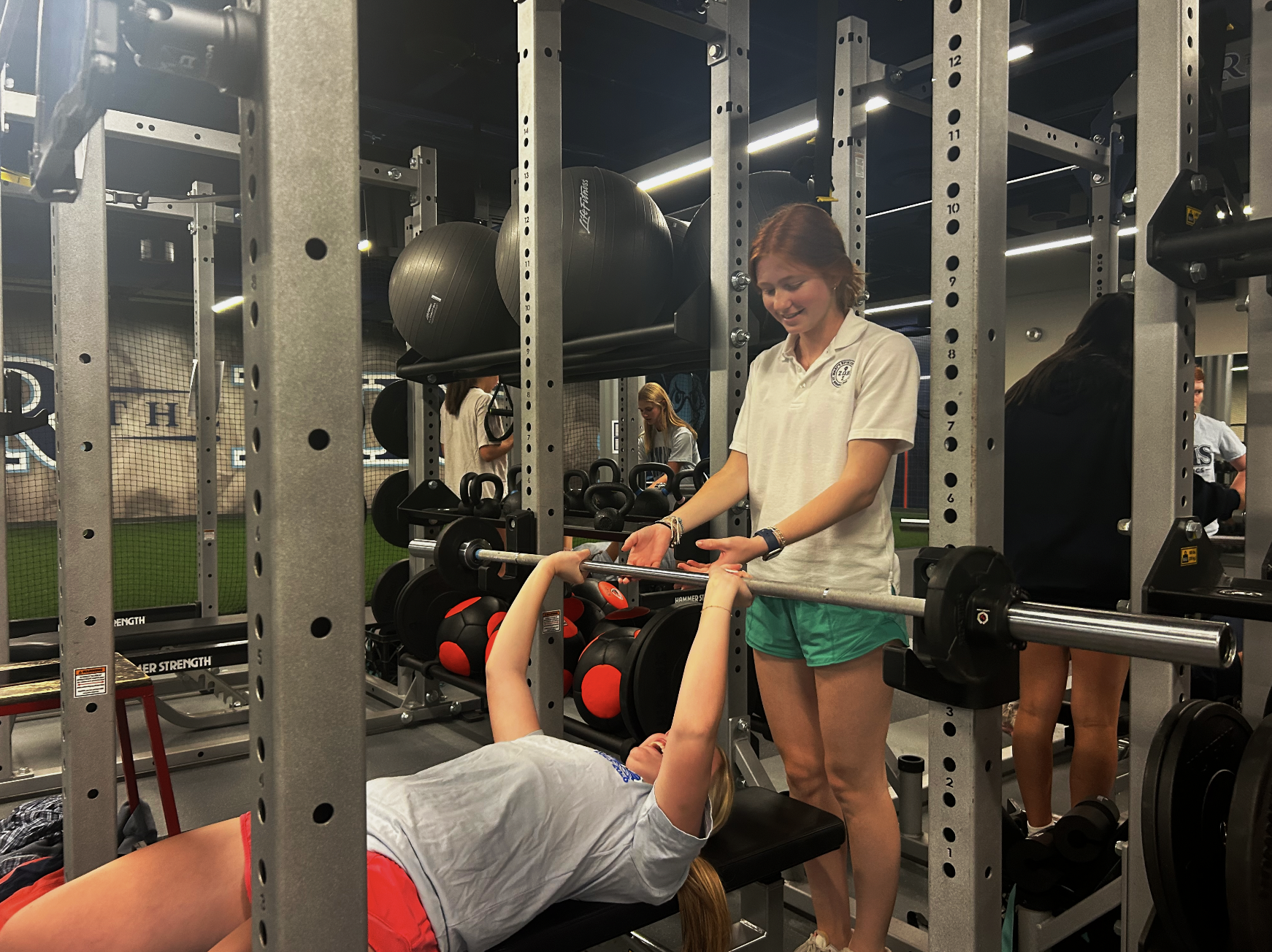
The sound of weights hitting the gym floor and music playing from the workout room is being heard now more than ever due to new workout requirements for student athletes.
As of the start of the 2025-26 school year, the athletic department has required two 40-minute workouts weekly for sophomores, juniors and seniors who play sports. Claire Betti, athletic trainer and strength and conditioning specialist, and John Bartholomew, athletic director, worked on getting this approved through the athletic department over the summer.
Betti believes the workouts will benefit students in the long run.
“The goal is consistency throughout the whole year,” Betti said. “You are building up all the strength pre-season, and then may want to continue working out during the season.”
Bartholomew said he believes that working out also builds confidence on the field.
“When we step onto the field and you have a little bit more endurance and strength, you know you’ve put in that work,” he said. “I think it builds a confident mind and [confidence] in yourself and in your team.”
The required workouts fulfill an elective credit for students but have no effect on students’ GPAs.
This requirement has faced some controversy, however. Cayden King, a junior and spring-season athlete in track, said she believes that the workouts, being a required elective with no academic weight, do not help students.
“If it’s not affecting our GPAs or it’s not doing anything to help us academically, why are we having a mandatory class for it?” King said.
But Betti said she believes that the credit will still be relevant to colleges when they are reviewing students’ transcripts.
“Your college can see that you were involved in more than just an after-school activity,” she said. “Most of these athletes were already working out. It’s just now you’re getting the recognition for it.”
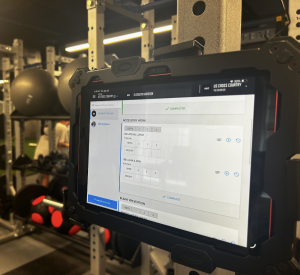
It’s up to the students to find time in their schedule to do these workouts. They can complete them before school, after school or in their free periods, but that can be tricky for students with busy schedules.
One fall-season soccer player, who asked that we not reveal her name, said that the workouts were causing her to perform worse in games due to scheduling.
“I wake up so early, and then I go to school tired and go to a game tired,” she said.
She said that she started skipping the workouts because she needed her free periods and extra time for school.
“[I was skipping workouts] to do the work that I was gonna do that night [but couldn’t] because of practicing and games,” she said.
King agreed that the workouts take away valuable time from students’ school days.
“[The workouts] should be based off of the student’s schedule instead of coaches,” she said.
The workouts earn students a half a point per semester if 30 are completed. However, if students do not have 30 workouts completed by the end of the semester, the point will not show up on their transcript at all.
This is not the only penalty for skipping. For Bartholomew, the workouts are an extension of practices for in-season athletes, especially when students do not show up for the workouts.
“I would do the same thing if a student is skipping practice, and I wouldn’t put them in the games,” he said. “It’s part of the practice requirements. It’s the practice schedule.”
Some students do see the benefits to these workouts. Jennings Goode, senior and spring-season athlete for lacrosse, said she appreciates the accountability.
“I’m someone who will say I’m going to work out and then end up doing my homework instead,” Goode said. “I think that it’s nice being held accountable to work out and get in shape for the season.”
Goode said she believes that the coaches have the students’ best interests in mind.
“I think the only reason [Betti] is doing this is to make us better athletes,” she said.
The plan is to continue with required workouts going forward. Betti said she hopes that the future of these workouts will include the whole school.
“I would love for a whole school requirement whether you’re an athlete or you are not an athlete,” she said. “I just think there’s a lot more benefits to it than just requiring something else just to make it a requirement.”