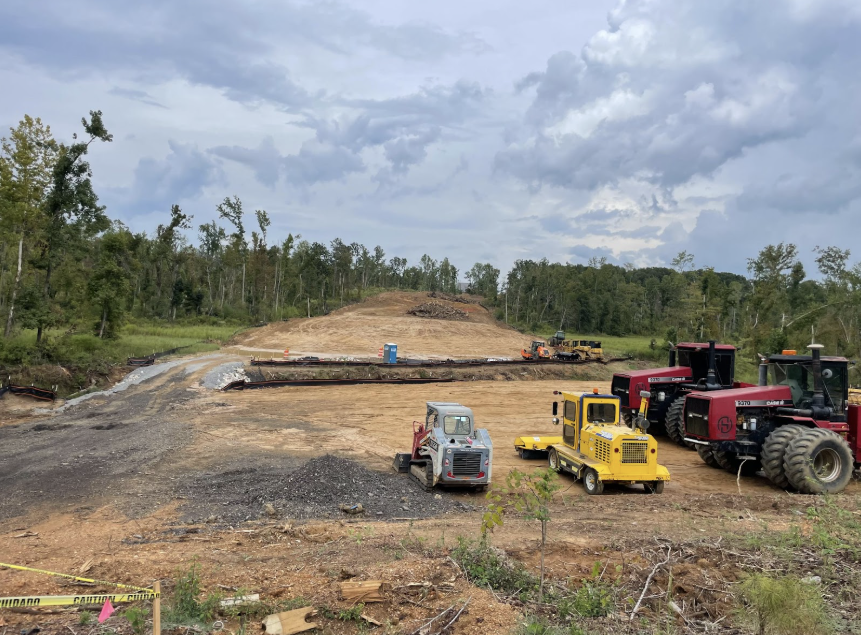
I’ve spent my entire life in the company of tall trees, sprawling fields of corn and cotton and peaceful country landscapes. Eads, Tenn. is a home to me and about 8,000 others, but now, residents are watching trees fall and their homes become just another part of industrial Memphis. As cities stretch into the countryside, nature continues to be sacrificed.
Urban sprawl, or the expansion of cities into bordering land, has been present in the US since the rise of suburban culture in the 1950s. Populations continue to grow, and the call for suburbs and exurbs has led to deforestation across the country. Urban sprawl accounts for a loss of 36 million trees per year.
Deforestation can lead to more carbon dioxide being released into the atmosphere because there are no trees to absorb it. It also leads to biodiversity loss, soil erosion and natural disasters.
This isn’t the only option, though. By making better use of space that is already developed but currently underutilized, Memphis and its surrounding communities can protect natural resources while leaving room for growth.
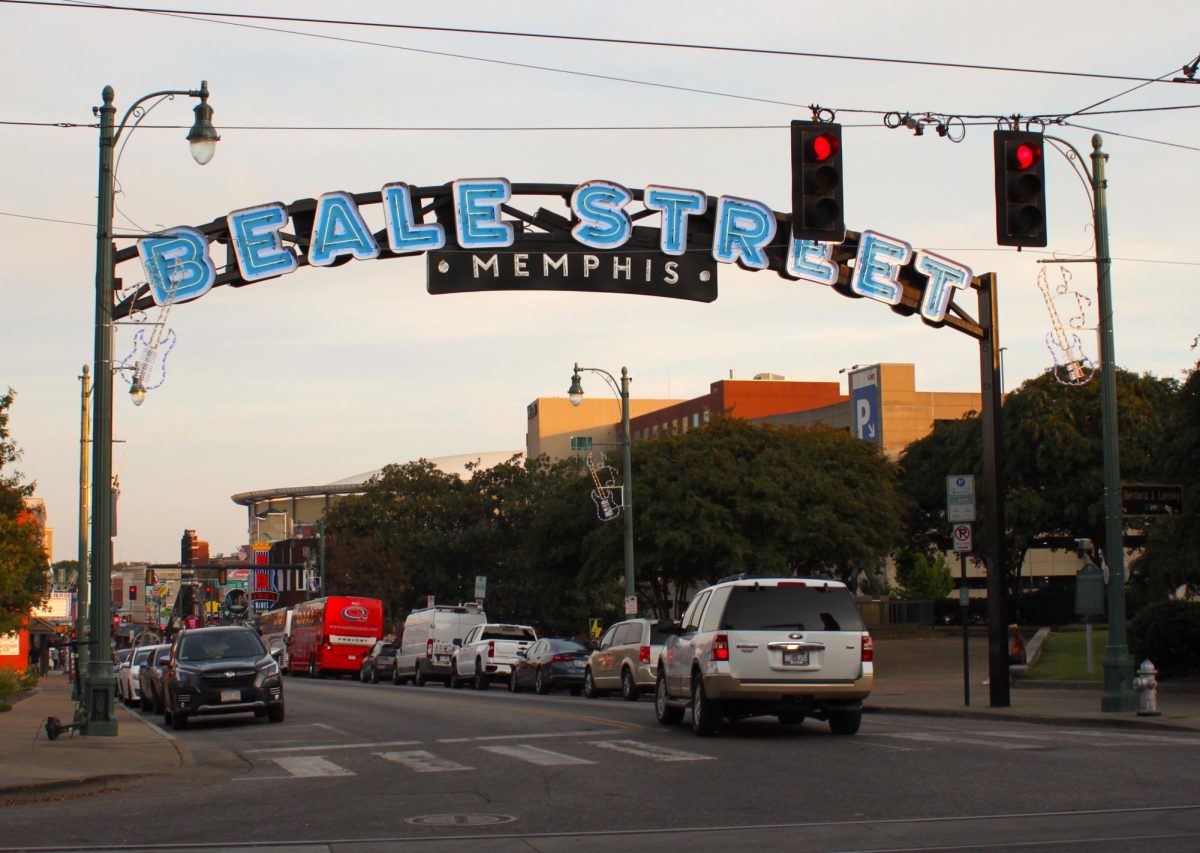
Historically, Memphis is not a great example of how to expand intelligently. Starting in the period following World War II, Memphis created its first modern suburb: East Memphis. This trend continued through the 1970s to 1990s, as towns like Germantown, Cordova and Bartlett became some of the many suburbs that would eventually contribute to Memphis’s increasing size.
During this time, the population increased only by 4%, but the geographic area increased by 55%. Before the city, Memphis was a diverse landscape of forests, wetlands and river systems, but the development led to the loss of much of these.
Beyond those suburbs are the exurbs and edge cities. Exurbs, like Eads, have no real commercial area, so residents have to go into more centralized areas to provide for themselves. Edge cities, like Arlington, are areas that have their own resources, but are still considered a part of the larger city.
After building an interstate through the Eads and Arlington area in the 1950s, the community began to expand around the 1990s, and is still continuing to this day. However, as Memphis continues to grow in population, expansion into these areas is leading to more development and therefore more destruction of land.
Deer have turned my backyard into a home because there’s nowhere else to go. Walking my dog has gone from a shady and relaxing task to a grueling one. The dry front lawns of some of my neighbors’ homes lack what make other lawns so green: nutrients and shade.
This isn’t to say that expansion is necessarily bad. In its own way, expansion is just as desirable as the trees. My parents chose to live in Eads because of the peace and quiet away from the city. But I can say that one reason my family has chosen to stay is because of the interstate and roads connecting us to the city. They’re how I get to school, how my dad gets to work, and how my mom can get the essentials to provide for the family.
There are still ways to preserve nature while also making room for the people who want to call Memphis and its surrounding areas home.
The first change that can be made is following the rules. For example, when building a house in my neighborhood, it’s a rule that while building on a lot containing many trees, it’s required that a Notice of Intent be filed, and for every tree removed, a replacement tree must be planted or a payment must be made to the city’s Tree Bank.
Other communities support reforestation in other ways. Within the city, Central Gardens gives out free trees to members of the home owners’ association. Arlington celebrates Tennessee Tree Day and gives out free trees then.
There are also organizations working to protect the natural environment. Ducks Unlimited and the Wolf River Conservatory are two of such organizations that are working to protect river ecosystems that are being affected by urban sprawl.
Development can also happen within the city. Memphis is home to around 13,000 vacant lots and abandoned buildings. While this would cost more than building on untouched land, it offers the city an opportunity to build without more natural destruction.
Growth doesn’t have to mean losing the beauty that makes Eads and Arlington so special; there’s a way to build while letting nature have its place. The best of both worlds is possible.