


We all know we’re not supposed to use AI, especially at St. Mary’s – it’s against the Honor Code, spreads misinformation and is painfully unoriginal. And we’re all aware that people continue to use AI anyway. But here’s another reason to quit: AI is catastrophic for our planet.
Generative artificial intelligence (AI) produces original content by consuming massive amounts of existing text, images, videos, music and code. While AI appears to think, chat and respond as a human, it instead predicts the next word in a sequence using lengthy algorithms and calculations.
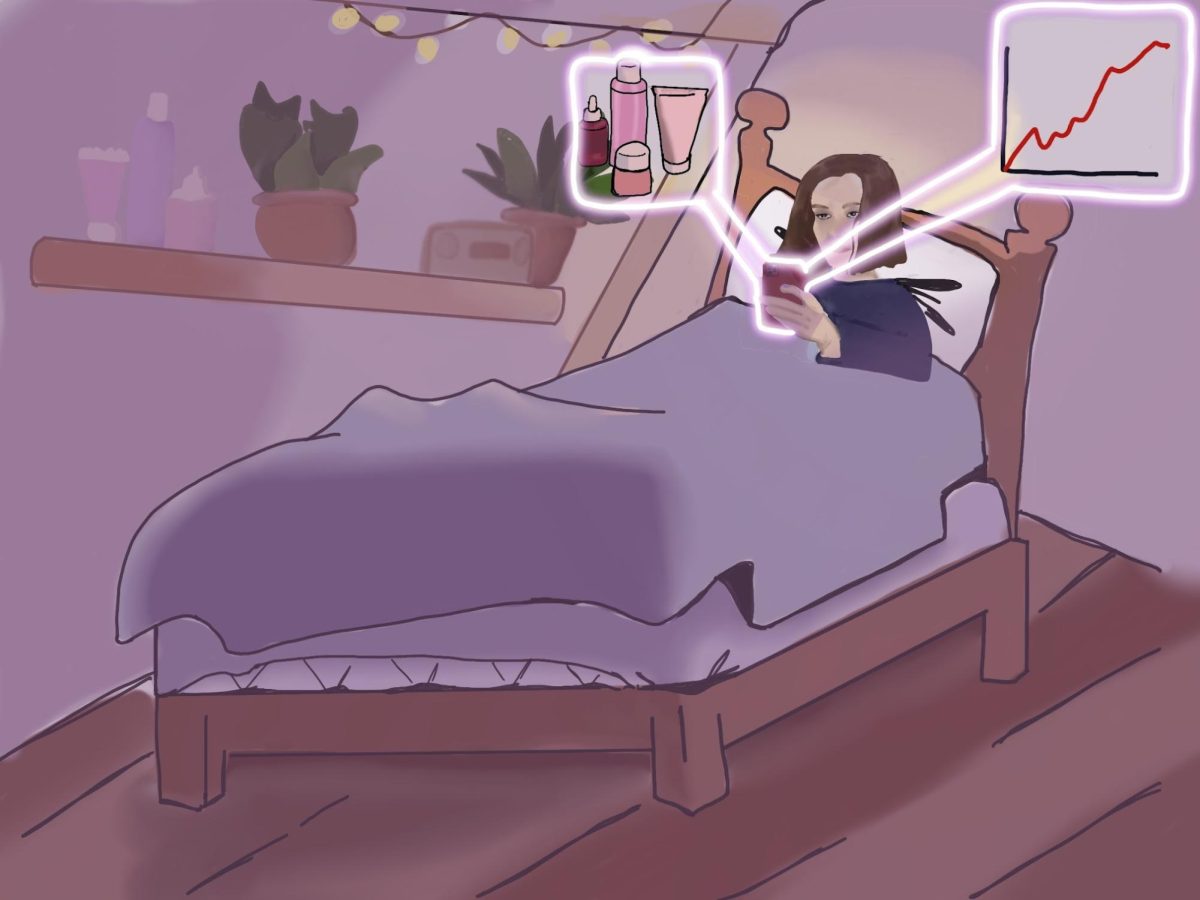
For teenagers, AI promises seemingly limitless answers to endless questions, requests for advice, emotional companionship and homework help. Seventy percent of St. Mary’s students report having used generative AI through programs such as ChatGPT, Google Gemini, Siri, Meta and Grok. More than 43% of these students said they use AI at least once a week.
They’re not alone. A nationwide survey by Brookings researchers found that 76% of adults under 30 use AI tools, and 50% use AI on a weekly basis.
The problem is that AI uses a massive amount of energy and water. A single generative AI request uses four or five times the 0.003kWh required for an ordinary search, according to the National Education Association.
It’s AI model training, however, that is responsible for the most consumption, expending much of the energy used to power AI server warehouses through the constant running of thousands of graphics processing units (GPUs). The electricity consumed in these data centers could account for 20% of global electricity use by 2030-2035, according to a study by Berkeley Lab.
Producing this electricity demands burning massive amounts of fossil fuels. Sixty percent of power to data centers comes from fossil fuels, and gas generation for AI purposes is expected to double by 2035, according to the International Energy Agency.
Environmentalists worry about the effect this will have on a planet already struggling with climate change. The carbon emissions that result from training AI models, weighing at over 600,000 pounds, are a monumental addition.
Huge amounts of water are also needed to cool the countless computer servers located in warehouses across the world, possibly consuming six times more water than Denmark, a country of six million.
This excess consumption puts thousands of communities at risk. With over 4,000 AI data centers in the U.S. and almost 12,000 worldwide, an extraordinary amount of water and energy is wasted by the searches.
A Microsoft AI data center in Mexico, for example, left small towns with frequent droughts and power outages in 2025, causing hepatitis to rack their vulnerable citizens as they were left unable to wash their hands or maintain basic hygiene.
Though Mexico may feel distant, the story raises the question – how long until this devastation reaches our own communities?
As it turns out, it’s already here.
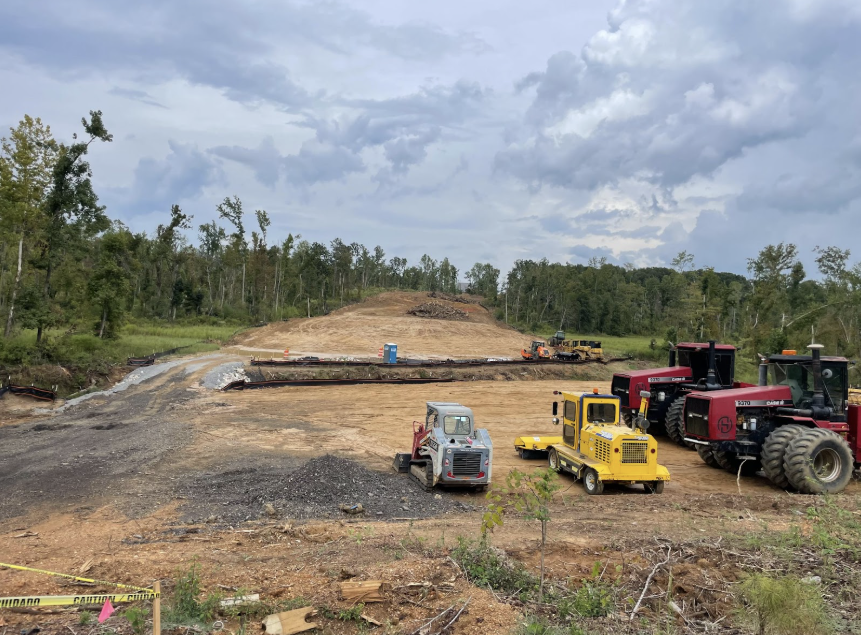
In Memphis, the use of generative AI is risking both the city’s water and its energy. Elon Musk has built the world’s largest xAI supercomputer, Colossus, in the city, using 1.3 million gallons of drinking water from the Memphis Sand Aquifer that provides citizens with drinking water. xAI’s demand for water, according to the director of the University of Memphis’s Center for Applied Earth Science and Engineering Research, accelerates contamination of our aquifer by breaching the protective clay layer.
Energy is another problem here in Memphis. The computer planned to use 150 mega-watts of electricity in 2025, enough energy to power 80,000 households. The company currently sources its power from thirty-five gas turbines, and therefore produces dangerous nitrogen dioxide gases that create pollution comparable to the output of an entire Tennessee power plant.
The eighteen turbines located in Southaven operate not on permanent permits, but exemptions that leave room for company exploits and dangerous loopholes.
As Memphians, our aquifer is also one of our city’s most important and defining characteristics. Companies directed by billionaires like Musk continue to lead global charges against not only our safety, but also our culture. To supply power to Colossus is to sacrifice our own identity.
Though the resulting pollution is undeniable, the Shelby County Health Department continues to approve of a permit allowing the use of the turbines, indirectly encouraging the installation of power plants without community approval.
Water and power – these are not dispensable resources. They are critical necessities a community requires for survival. Our aquifer, our electricity and our lives face the threat of a company that considers Memphis, not as a city of rich history, culture and possibilities, but instead as expendable.
As recently as Dec. 30, Musk bought a property in Southhaven to expand project Colossus, expanding his AI footprint throughout the Mid-South. This is another step toward his goal of creating a tech company named Macrohard that rivals Microsoft. This displays Musk’s blatant disregard for Memphis and his relentless obsession not with “solving impossible questions” for the sake of humanity, but with hoarding money at the expense of towns and cities.
However, we can reduce the effects of AI through simple, but careful efforts.
Both in school and at home, minimize your use of AI. Unnecessary programs like Chat GPT, Meta and Grok can be completely cut out of daily use with zero consequences. Use more unavoidable programs with caution and conscience.
Joining organizations and nonprofits fighting the effect of AI can hold Musk and other AI companies accountable for their damage – among them include PauseAI, Algorithm Justice League (AJL) and Memphis’s own Protect our Aquifer and Safe and Sound Coalition.
Google, Microsoft, xAI and other large companies are aware of the leverage they have over ordinary citizens. After all, they have assumed control over the resources that permit us our day-to-day tasks. We owe the planet our lives – now, our lives lie in the hands of self-absorbed, often malicious strangers.
Our reckless use of AI leads to the destruction of towns, cities and potentially the world. It’s not too late to take control of AI’s growing dominance over our society and make a true difference in saving our planet.








Oakley Day • Jan 24, 2026 at 12:31 pm
amazing writing and such an important message that people need to hear, not only in memphis but the whole world!! thank you mayra for this beautiful piece and giving a voice to issues that are tearing people and the planet apart.